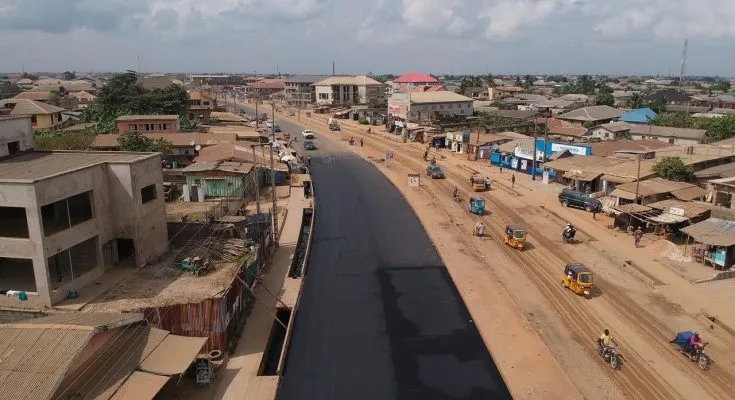
Mowe Ofada is a fast-growing corridor in Ogun State, strategically positioned along the Lagos–Ibadan Expressway. Over the past two decades, the area has transitioned from a largely agrarian settlement into a mixed residential, commercial, and commuter hub. Its proximity to Lagos, combined with relatively quieter surroundings, has made it a notable destination for people seeking balance between urban access and suburban calm.
Location and Accessibility
Mowe Ofada lies just after the Lagos–Ogun boundary when travelling northbound on the Lagos–Ibadan Expressway. It sits close to key landmarks such as the Redemption Camp and serves as a gateway into several Ogun communities including Ofada town, Arepo, Ibafo, and Magboro.
Accessibility is one of the area’s defining strengths. The expressway provides direct road access to Lagos mainland areas like Berger, Ojodu, and Ikeja. However, commuting patterns are heavily influenced by traffic conditions, especially during weekday mornings and evenings.
Internal roads within Mowe and Ofada vary in quality. While major streets and access roads are fairly motorable, some inner roads—particularly deeper into Ofada—may still be uneven or seasonal.
History and Community Background
Ofada is historically known as a farming community, with agriculture—especially rice cultivation—playing a central role in its identity. The term “Ofada rice” has become nationally recognized, linking the town’s cultural heritage to Nigerian cuisine.
Mowe, on the other hand, grew more rapidly due to its location along the expressway and the establishment of large institutions and camps in the area. Over time, Mowe evolved into a more cosmopolitan settlement, attracting people from different ethnic and professional backgrounds.
Today, Mowe Ofada represents a blend of indigenous Ogun communities and newer settlers, resulting in a diverse but generally peaceful social structure.
Lifestyle and Daily Living
Life in Mowe Ofada is notably calmer than central Lagos, but it is not rural in the traditional sense. The area supports a semi-urban lifestyle with access to essential services, local markets, religious centers, and recreational spots.
Residents typically enjoy:
- Lower population density compared to Lagos mainland
- Quieter nights and less congestion off the expressway
- A strong sense of community in older parts of Ofada
Daily life often revolves around early mornings and early evenings, especially for commuters. Weekends tend to be relaxed, with markets, local eateries, and social gatherings becoming more active.
Transportation and Mobility
Transportation in Mowe Ofada is dominated by road travel. Common modes include:
- Private vehicles
- Commercial buses and minibuses
- Motorcycles (more common within inner streets)
The Lagos–Ibadan Expressway remains both an asset and a challenge. While it provides direct connectivity, traffic congestion—especially around the Mowe interchange and Redemption Camp—can significantly affect travel time.
Ongoing and completed road projects have improved certain stretches, but residents still plan movements carefully around peak hours.
Commerce, Markets, and Local Economy
Mowe Ofada supports a vibrant local economy driven by trade, agriculture, and small-scale businesses.
Key commercial features include:
- Local markets selling food items, grains, and household goods
- Roadside trading along major routes
- Small shops, pharmacies, and service centers
Ofada’s agricultural roots remain visible, with farming and produce trading still providing livelihoods for many residents. In Mowe, commercial activity leans more toward retail, hospitality, and services catering to commuters and visitors.
The area also benefits from its proximity to larger commercial hubs in Lagos, making it easier for residents and business owners to source goods.
Food, Culture, and Social Life
Culturally, Ofada holds a strong Yoruba heritage, reflected in festivals, food, and community structures. Traditional events, family compounds, and cultural ceremonies are still observed, especially in the older town areas.
Food plays a major role in local identity. Ofada rice, often served with local sauces, is widely available both within the community and along the expressway. Beyond traditional meals, the area also offers:
- Local bukas and roadside eateries
- Casual restaurants and lounges in Mowe
- Food vendors serving commuters and travelers
Social life is generally modest and community-oriented. Large nightlife scenes are limited, but social gatherings, religious events, and family functions are common.
Education and Institutions
Mowe Ofada hosts a mix of public and private educational institutions, ranging from primary schools to secondary schools. Several faith-based and private schools cater to families in the area, while higher education institutions are accessible in nearby towns and cities.
Religious institutions—churches and mosques—are prominent, with some large camps and worship centers attracting visitors from outside Ogun State.
Safety and Community Organization
Security in Mowe Ofada is largely community-driven. Residents rely on a mix of local vigilance groups, neighborhood associations, and formal security agencies.
While the area is generally considered calm, like many growing communities, safety conditions can vary by location and time of day. Community involvement and familiarity among residents play an important role in maintaining order.
Infrastructure and Development Trends
Infrastructure development in Mowe Ofada has been gradual but noticeable. Improvements in road access, electricity coverage, and telecommunications have supported population growth.
The area continues to evolve as:
- Lagos expands outward
- More people seek alternatives to dense urban living
- Commercial activities extend beyond traditional city centers
Despite this growth, parts of Ofada still retain a semi-rural character, offering a contrast to the busier Mowe axis.
Overall Character of Mowe Ofada
Mowe Ofada stands out as a transitional zone—neither fully urban nor fully rural. Its appeal lies in its location, cultural roots, and relative calm compared to nearby metropolitan areas.
For visitors, commuters, and residents alike, the area offers:
- Strategic access to Lagos and Ogun towns
- A blend of tradition and modern living
- A slower pace without complete isolation
As Ogun State continues to develop, Mowe Ofada remains an important corridor that reflects both the challenges and opportunities of peri-urban growth in southwestern Nigeria.
Mowe Ofada Property Listings
Lands | Rental Houses | Houses (Sales)
Image Credit: newdawnngr